For a flight, start with the battery information and your airline’s rules, then decide whether the complete kit earns its place in your bag. A product described as travel-friendly is not a guarantee of acceptance on every route.
By RecoveryGlow · Sources checked September 21, 2026. This guide uses U.S. FAA guidance and manufacturer specifications. Check current airline and destination requirements before departure.
As an Amazon Associate I earn from qualifying purchases. Amazon links are marked as paid links. How our links work
Explore the equipment
The Theragun Mini 3rd Gen shown below is the model linked in this guide. Check its battery details and your airline’s rules before packing.
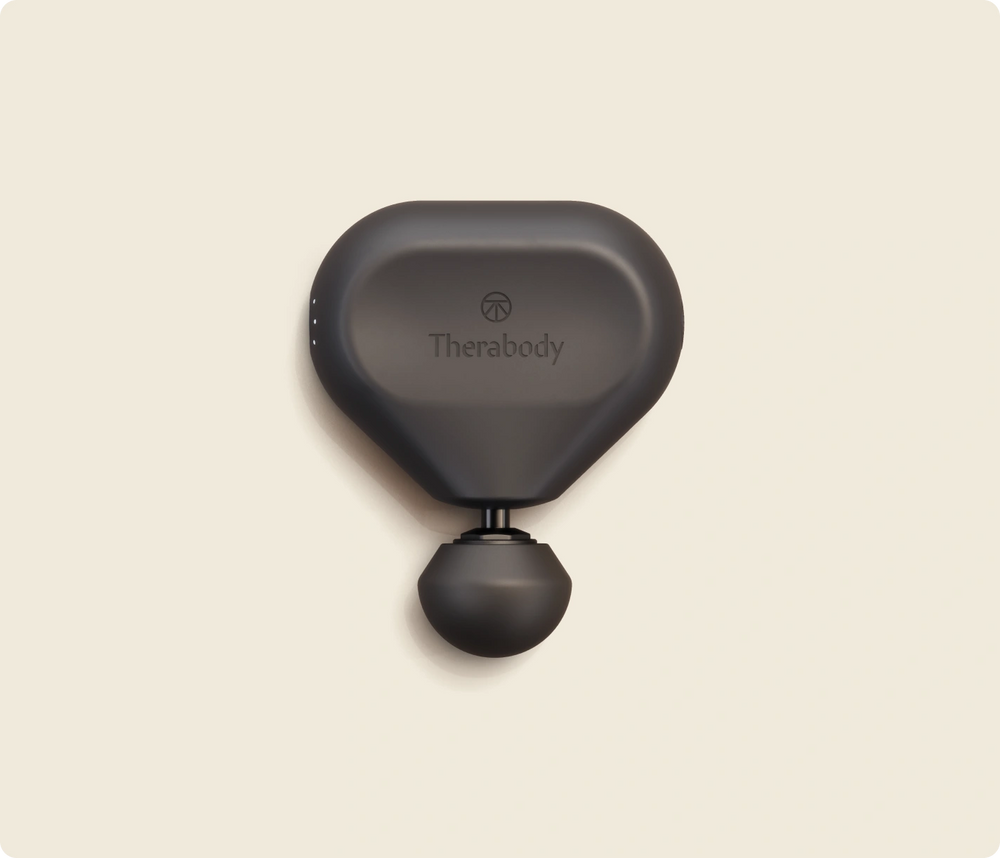
Photos: Therabody. Product photographs are not to scale. Shopping buttons open the matching manufacturer product pages. Check current price and availability there.
Separate the device from spare batteries
| Item | FAA guidance to check |
|---|---|
| Device with its battery installed | Carry in cabin baggage where possible |
| A lithium-powered device placed in checked baggage | Fully power it off and protect it against damage and accidental activation |
| Spare lithium batteries or a power bank | Carry-on only; protect battery terminals |
| A bag checked at the gate | Remove spare lithium batteries and power banks before handing it over |
Source: FAA guidance for electronic devices containing batteries and FAA guidance for lithium batteries. Damaged or recalled batteries that present a heat or spark hazard must not be carried unless removed or otherwise made safe under the applicable guidance.
Record the battery rating before departure
Look for the battery’s watt-hour rating in the manual or on its label. If it is missing, ask the manufacturer for the exact model’s information. Do not assume that a small massage gun has the same battery as another generation with a similar name.
The FAA’s standard lithium-ion battery limit is 100 Wh. Larger batteries in the 100–160 Wh range require airline approval, and the rules for spare batteries have additional limits. Airlines can set stricter requirements. Use the official FAA battery guidance and your carrier’s instructions rather than treating this article as clearance for a particular device.
Battery runtime is a different measurement. A claim of two hours of operation does not tell you the watt-hour rating. Nor does the size of the USB charger. Save the relevant manual page so you can retrieve the correct information without searching through marketing pages at the airport.
Pack the complete setup on your desk first
Lay out the device, its protective case, the attachment you expect to use, its charging cable and any required power adapter. That collection is your actual travel kit. A bare-device weight does not represent the weight you will carry.
Try packing it after your normal essentials. If you would need to leave out something more useful, consider keeping the massage gun at home for this trip. A short journey with no planned time to use it is a poor reason to bring another electronic device.
Keep loose attachments together and protect the power switch from pressure in the bag. If your model has a travel lock, learn how to activate and release it before leaving. A travel lock is a packing feature, not a replacement for following baggage rules.
One model example, with clear limits
Therabody lists a travel lock, USB-C cable, soft travel case and three attachments for the Theragun Mini 3rd generation. Its published bare-device weight is 0.40 kg. Those facts help you compare packing convenience; they do not establish your complete bag weight or airline acceptance. Manufacturer specifications.
If you are deciding between that model and the Hypervolt Go 3, use our side-by-side comparison. Choose the device for how you intend to use and carry it, then separately verify its travel requirements.
Charging is a packing decision too
Read the device’s charging instructions and check what is included in the actual listing. A charging cable does not necessarily mean a wall adapter is supplied. Pack a compatible setup specified by the manufacturer rather than relying on a familiar-looking connector.
For an international trip, check your charger label and the destination’s outlet format in advance. A plug adapter and a voltage converter perform different jobs. If the labels or instructions are unclear, ask the charger or device manufacturer before use.
Before you close the bag
| Check | Your answer |
|---|---|
| Exact model and generation recorded? | Write down the name from the device |
| Battery rating and airline guidance checked? | Keep the source page or manual available |
| Device protected and switched off? | Check the case and controls |
| Spare batteries and power banks in cabin baggage? | Recheck if your bag is gate-checked |
| Cable and required adapter packed? | Confirm against the product instructions |
| A specific time you will use it? | If not, consider leaving it home |
Find a model or keep planning
Find Theragun Mini 3rd generation on Amazon (paid link)
Amazon links open search results. Check the exact model, size, seller, package contents and return terms. Prices and availability are shown on Amazon.
The small-bag packing guide
Which massage-gun specifications matter
Browse all buying guides
Use this airline-confirmation workflow
Rules can differ by carrier and route, so finish the research in this order: identify the exact device and battery rating; read the current FAA PackSafe pages; open your operating airline’s restricted-items page; then contact the airline if the device is not clearly covered. Save a screenshot or PDF of the answer with the date and flight number. If a codeshare is involved, check the airline operating the flight, not only the company that sold the ticket.
| Evidence to save | Why it matters at the airport |
|---|---|
| Device label and exact generation | Similar product names can use different batteries |
| Battery watt-hours or manufacturer documentation | Runtime and charger size do not establish battery energy |
| Operating airline’s current rule | An airline may be stricter than the general federal limit |
| How the power switch is protected | A packed device must not activate accidentally |
Checked September 21, 2026: the FAA still directs passengers to carry spare lithium batteries and power banks in carry-on baggage, protect their terminals, and remove them from any bag checked at the gate. For a device placed in checked baggage, the FAA says it must be completely switched off and protected from damage and accidental activation. The FAA device page and lithium-battery page remain the controlling sources for this U.S.-focused checklist.